
An electronic logging device, or ELD, connects to a commercial vehicle and automatically records when the truck is being driven.
It replaces the paper logbooks drivers once used to record their working and driving hours by hand. Instead of drawing lines on a paper grid, drivers can now view their Hours of Service, change duty status and provide logs during an inspection using a phone or tablet.
That is the basic purpose of an ELD. Modern systems can do much more. Depending on the device, an ELD can also provide live GPS tracking, vehicle diagnostics, IFTA mileage, driver behavior reports, maintenance alerts and other fleet telematics.

What is an ELD?
An ELD, or electronic logging device, is a device that connects to a commercial vehicle’s engine and automatically records the driver’s driving time. ELDs range from simple Bluetooth devices built primarily for Hours of Service compliance to LTE-connected ELDs that also provide dedicated GPS tracking, vehicle diagnostics, driver behavior reporting and other fleet telematics. We explain the differences between Bluetooth and LTE ELDs below.
The ELD collects information directly from the vehicle, including:
The driver uses an ELD app to view the electronic log, monitor remaining Hours of Service, change duty status and certify that the record is correct.
The carrier uses an online portal to review driver logs, identify possible violations, manage unidentified driving and see which drivers have time available for another load.
FMCSA defines an ELD as a device that synchronizes with a vehicle’s engine to automatically record driving time and make Hours of Service records easier to track, manage and share.
What does ELD stand for?
ELD stands for Electronic Logging Device.
You may also hear it called:
These terms are commonly used to describe the same system, but not every electronic logbook app is a compliant ELD.
A basic logbook app may allow the driver to enter hours manually. An FMCSA-compliant ELD must meet specific technical requirements and automatically record driving activity using information received from the vehicle.
How does an ELD work?
An ELD system normally has three parts:
The physical ELD plugs into the vehicle’s diagnostic port. Depending on the truck, it may use an OBD-II, J1939 9-pin, J1708 6-pin or another type of connection.
The device receives information from the truck and sends it to the driver’s app via Bluetooth.
When the vehicle begins moving, the ELD automatically changes the driver’s duty status to Driving. The driver manually selects other statuses, such as:
The ELD uses this information to create the driver’s electronic Record of Duty Status, commonly called a RODS.
What does an ELD record?
A compliant electronic logging device records the information needed to create an accurate Hours of Service log.
This includes:
Because the ELD receives information from the truck, the driver does not need to remember when every driving period began or ended. The driving record is created automatically.
What is the ELD mandate?
The ELD mandate is a federal rule requiring most commercial drivers who maintain Hours of Service Records of Duty Status to use an electronic logging device.
The mandate was passed as part of the Moving Ahead for Progress in the 21st Century Act, commonly known as MAP-21. It directed the U.S. Department of Transportation to require ELD use in commercial vehicles involved in interstate commerce when operated by drivers who must maintain Records of Duty Status.
The ELD rule was published in December 2015.
Most affected carriers and drivers were required to begin using an ELD or qualifying grandfathered AOBRD by December 18, 2017. The final transition period ended on December 16, 2019, when all non-exempt drivers subject to the rule were required to use registered ELDs.
The ELD mandate:
The mandate did not change the basic Hours of Service limits, it changed how a driver’s hours are recorded and maintained.
Who must comply with the ELD mandate?
The ELD mandate generally applies to motor carriers and drivers who are required to maintain Records of Duty Status under federal Hours of Service regulations.
This can include drivers operating:
The requirement is not limited to CDL drivers.
A non-CDL driver may still need an ELD when operating a regulated commercial motor vehicle and maintaining Records of Duty Status.
The same applies to owner-operators. Owning the truck does not create an exemption from the ELD mandate.
Commercial pickup trucks require an ELD when they are used in interstate commerce, meet the definition of a commercial motor vehicle and the driver is required to maintain Records of Duty Status. This commonly includes hotshot drivers operating a pickup and trailer with a combined weight rating of 10,001 pounds or more, as well as drivers transporting placarded hazardous materials. A driver who qualifies for the short-haul or another ELD exemption may not need one.
The practical question is:
Does the driver need to maintain a Record of Duty Status, and does an ELD exception apply?
If a RODS is required and no exception applies, the driver generally needs an ELD.
Who is exempt from the ELD mandate?
Not every commercial driver is required to use an ELD. Common ELD exemptions include:
Short-haul drivers
Drivers who qualify for the short-haul timecard exception are not required to maintain a standard Record of Duty Status and therefore do not need an ELD.
The driver must meet all conditions of the short-haul exception. Simply returning home every night does not automatically qualify someone.
Drivers who keep logs eight days or fewer
A driver who is required to maintain RODS for no more than eight days within any rolling 30-day period may use paper logs on those days.
Pre-2000 vehicles
Drivers operating vehicles manufactured before model year 2000 may qualify for an ELD exemption.
Certain vehicles with engines manufactured before model year 2000 may also qualify when the carrier has documentation showing the engine model year.
Driveaway-towaway operations
An exemption may apply when the vehicle being driven is the commodity being transported, such as certain vehicle delivery operations.
FMCSA identifies short-haul drivers, drivers keeping RODS no more than eight days in 30, qualifying driveaway-towaway operations and vehicles manufactured before model year 2000 among the main ELD exceptions.
An ELD exemption does not always exempt the driver from Hours of Service rules. Paper logs, time records or other documentation may still be required.
Do ELDs include GPS tracking?
Yes. An ELD uses GPS location data as part of the driver’s electronic record. Most commercial ELD systems also provide GPS tracking that allows the carrier to see where its trucks are located.
With a standard Bluetooth ELD, location updates may be sent through the driver’s phone or tablet. This works well for fleets that need basic tracking and ELD compliance without a separate cellular plan for each device.
More advanced LTE ELDs have their own cellular connection. Because the device remains connected independently of the driver’s phone, it can provide more consistent vehicle tracking and support additional telematics.
Depending on the ELD and software, those features may include:
A basic ELD records the information needed for Hours of Service compliance.
An LTE ELD can also serve as a connected telematics device that gives the carrier a clearer picture of how the truck is being operated.
Bluetooth ELD vs. LTE ELD
Both types of ELD can meet the same Hours of Service requirements. The main difference is how they communicate.
Bluetooth ELD
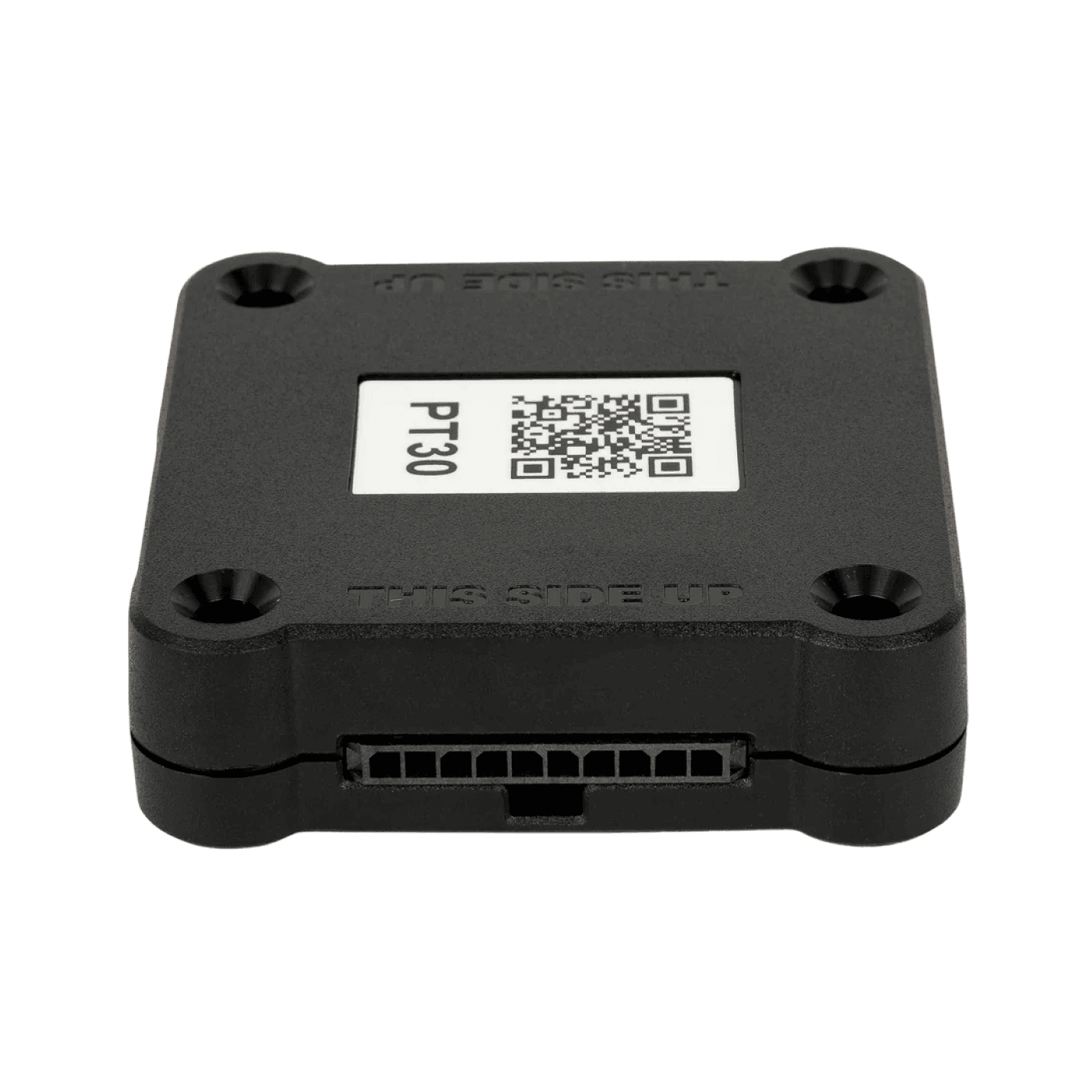
A Bluetooth ELD connects to the driver’s phone or tablet.
It is usually the simplest and most affordable option for owner-operators and smaller fleets.
Best for:
The driver’s device must have Bluetooth enabled and the ELD app must be running with the correct permissions.
The Pacific Track PT-30 is one of our most popular Bluetooth ELDs. Shop the PT-30.
LTE ELD
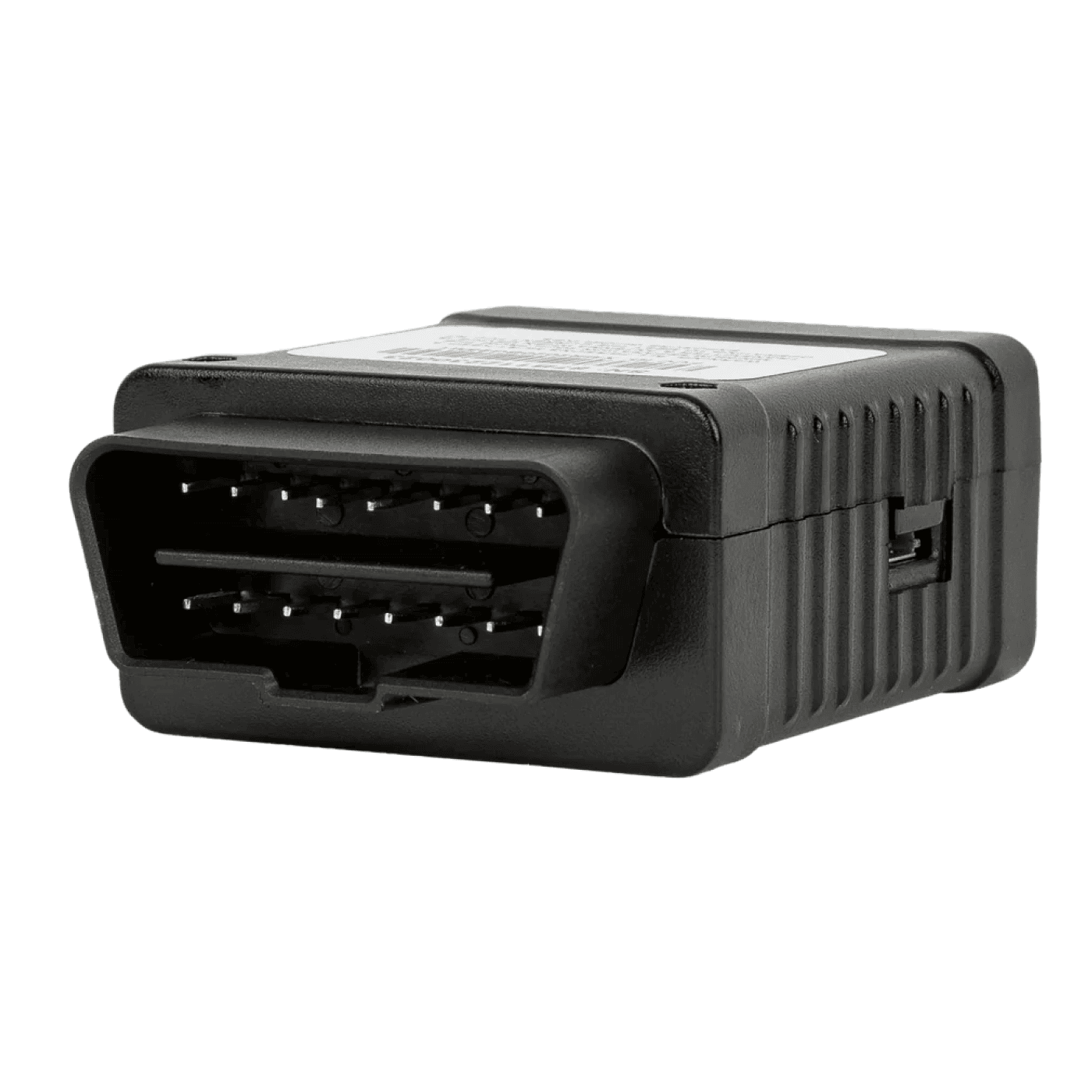
An LTE ELD has its own cellular connection. It communicates directly with the carrier’s platform and does not rely entirely on the driver’s personal phone to transmit vehicle information.
Best for:
The Geometris 87X is a plug-and-play OBD-II ELD with LTE, dedicated GPS tracking and advanced fleet telematics. Shop the Geometris 87X.
Ultimately, the right choice depends on whether the fleet needs only ELD compliance or wants the device to become part of a broader fleet-management system.
Can a smartphone be used as an ELD?
A smartphone or tablet can be used as the display and driver interface for an ELD system.
The driver can use the device to:
The phone or tablet is not the ELD by itself. It serves as the driver interface, while a connected ELD device collects the required information from the vehicle. Fleets that provide company-owned tablets can use Mobile Device Management to lock devices into work apps, manage settings remotely and keep the ELD app available to drivers.
A portable phone or tablet must be mounted in a fixed position and visible to the driver while the commercial vehicle is being operated. Fleets that want a dedicated in-cab device can shop Samsung fleet tablets configured for ELD, navigation and other driver applications.
What happens during a roadside inspection?
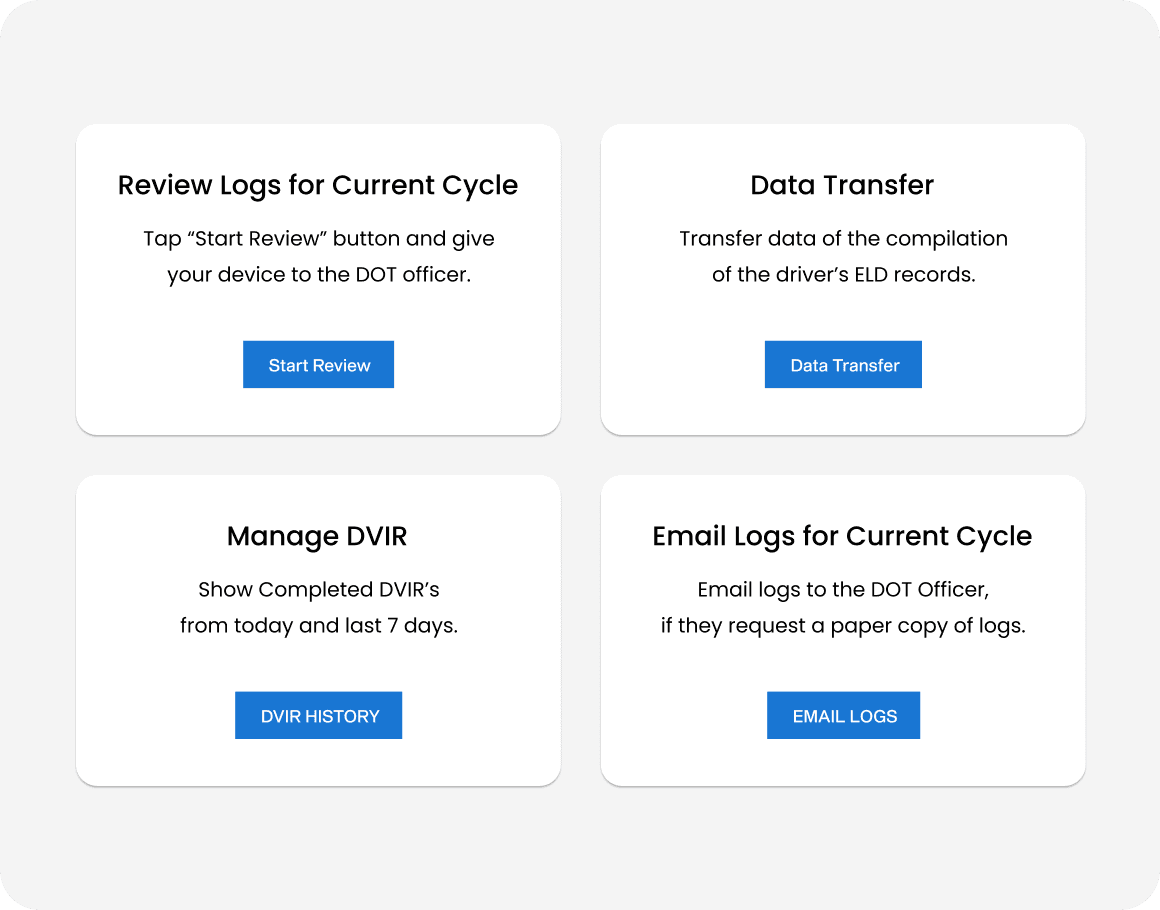
During a roadside inspection, the officer may ask the driver to display or transfer the electronic logs.
The driver should know how to:
Depending on the system, logs may be transferred through web services, email, Bluetooth or USB.
Drivers should practice this process before an inspection.
An ELD may be easy to use during a normal day, but inspection mode is where poor training becomes obvious.
Can an ELD log be edited?
Drivers and authorized carrier employees can correct certain mistakes in an electronic log.
For example, an edit may be needed when:
The original event is not erased. The ELD keeps a record of the original entry, the correction, who made it and why it was changed.
A carrier may propose an edit, but the driver must be able to review and accept or reject it.
Automatically recorded driving time cannot simply be deleted to give the driver more available hours.
What happens if an ELD stops working?
An ELD malfunction does not pause the Hours of Service rules.
If the device can no longer accurately record or display the driver’s hours, the driver should:
The carrier generally has eight days to repair, service or replace the malfunctioning device.
Drivers should carry the required ELD instructions and enough blank log pages to cover at least eight days.
How much does an ELD cost?
ELD pricing depends on the hardware, connectivity and software included.
A fleet may pay for one-time expenses:
A fleet may have recurring expenses such as:
Some providers charge separately for ELD hardware, software and cellular data, while others bundle them together. Bluetooth ELDs are usually less expensive because they use the driver’s phone or tablet for connectivity. LTE ELDs typically cost more because they include dedicated cellular service, GPS tracking and fleet telematics.
Trucking Hub has transparent pricing with no long-term contracts or hidden fees. Also, Trucking Hub has an online store so you can shop all fleet devices in one place and compare current hardware prices.
Before choosing a provider, ask:
The lowest monthly price is not always the lowest total cost.
How to choose the right ELD
Every ELD should record driving time and support Hours of Service compliance.
What changes from one provider to another is reliability, ease of use, support and the quality of the carrier portal.
Verify the FMCSA registration
Check that the exact device appears on the current FMCSA Registered Devices list.
This is more important than ever. FMCSA has continued removing devices that fail to meet federal requirements, including 10 devices removed from the registered list on July 9, 2026.
Do not rely only on a provider saying that its device is “FMCSA approved.” ELD manufacturers register and certify their devices, while FMCSA maintains registered and revoked device lists.
See FMCSA’s current list of registered ELDs.
Test the driver app
A driver should be able to quickly:
The driver app should not require a training manual for basic daily tasks.
Review the carrier portal
The office should be able to quickly find:
Confirm vehicle compatibility
The ELD should support the trucks in the fleet, including the correct cables for:
Ask about support and contracts
Find out whether drivers can contact support directly, how quickly replacement devices ship and whether the provider requires a long-term contract.
A low-cost ELD becomes expensive when the fleet cannot get help or leave the provider.
Frequently Asked Questions
Is an ELD required in every commercial truck?
No. The ELD mandate generally applies when the driver must maintain Records of Duty Status and does not qualify for an exception.
Do non-CDL drivers need ELDs?
Some do. The requirement is based on the commercial vehicle, operation and logging requirements, not only on whether the driver has a CDL.
Do owner-operators need ELDs?
Most owner-operators who maintain Records of Duty Status need an ELD unless an exemption applies.
Do hotshot drivers need ELDs?
Many hotshot drivers need ELDs. The requirement depends on the vehicle combination, type of operation, Hours of Service requirements and available exemptions.
Does an ELD track the truck?
Yes. An ELD records location information, and most ELD platforms also provide GPS tracking. LTE ELDs can provide always-on tracking and more advanced telematics.
Can driving time be deleted?
Automatically recorded driving cannot be deleted simply to create more available hours.
How long must ELD records be stored?
Motor carriers must retain ELD RODS data and supporting documents for six months, along with a separate backup copy.
Does an ELD record video?
Only when the ELD is combined with a dashcam or camera system.
Can an ELD be moved between trucks?
Many plug-and-play ELDs can be transferred between compatible vehicles. The device and vehicle assignment must be updated correctly.
What to know before choosing an ELD
A good ELD should make compliance easier, not add another problem for drivers and the office to manage. The right system should be simple to use, reliable on the road and compatible with every truck in your fleet. Trucking Hub has supported fleets with ELD compliance since 2017, with Bluetooth and LTE options for light, medium and heavy-duty vehicles. Fleets can choose straightforward electronic logging or add dedicated GPS tracking, telematics, dashcams and other fleet-management tools as they grow.
Explore Trucking Hub's ELD software and ELD devices.